
Offshore Development Trends in 2026: What’s Changing for Australian Startups
 Probits
Introduction: Embracing a New Era of Offshore Teamwork
Australian startups thrive on agility, resourcefulness, and access to world-class tech talent. Over the last decade, offshore development has evolved from a cost-cutting tactic into a strategic driver of innovation and sustainable growth. In 2026, new technologies, shifting talent markets, and stronger compliance expectations are reshaping how founders build and manage offshore software development teams.
Today, offshore development is no longer about outsourcing tasks. It is about building distributed teams that operate as an extension of your core business. Many Australian founders now treat offshore teams as long-term partners rather than external vendors, especially when scaling complex software products or validating new ideas through an MVP.
This guide explains how modern Australian startups can build future-proof offshore teams. It covers emerging offshore trends, legal and compliance considerations, cultural best practices, and proven strategies based on Probits’ experience supporting startups across Australia.
Why Offshore Development Is Evolving for Australian Startups
Several forces are accelerating the shift toward strategic offshore development:
- Remote-first work models are now standard across the global tech industry
- Access to specialised skills is no longer limited by geography
- Speed to market is a competitive advantage, especially for startups validating MVPs
- Founders increasingly prioritise flexibility, innovation, and execution quality over pure cost savings
For many startups, offshore development now supports faster MVP validation before scaling. This approach aligns closely with the need to prove demand early, as outlined in MVP Validation: Why Startups Must Prove Demand Before Scaling.
Key Offshore Development Trends for 2026
Hybrid and Distributed Team Models
Australian startups are increasingly adopting hybrid delivery models that combine local leadership with offshore development teams. This structure allows founders to retain control over product vision and intellectual property while scaling execution efficiently.
In practice, teams may collaborate across Australia, Nepal, Eastern Europe, and Africa, operating with overlapping work hours and continuous delivery workflows. Local teams typically focus on strategy, architecture, and customer insights, while offshore developers handle feature development, QA, and integrations.
This shift reflects a broader mindset change. Offshore teams are no longer viewed as cost centres but as growth enablers. This perspective is explored further in Offshore Development Teams: Cost Center or Growth Engine for Australian Startups?.
Expanding Global Talent Destinations
In 2026, Australian founders are looking beyond traditional offshore locations. Emerging tech ecosystems in Eastern Europe, Southeast Asia, Latin America, and parts of Africa now offer highly skilled developers with strong communication abilities and startup experience.
Rather than focusing purely on location, startups evaluate offshore talent based on:
- Relevant technical expertise
- Time zone overlap with Australia
- English proficiency and collaboration skills
- Experience working with international startups
This shift is especially important for non-technical founders who rely heavily on offshore partners for execution. A deeper breakdown of this approach is covered in Offshoring for Non-Technical Founders: A Step-by-Step Guide.
AI and Automation Transform Offshore Collaboration
Artificial intelligence is playing a major role in how offshore teams operate. Startups increasingly use AI-powered tools to streamline collaboration, reduce overhead, and improve delivery quality.
Common applications include:
- Automated sprint summaries and documentation
- AI-assisted code reviews and testing
- Predictive analytics to identify delivery risks
- Smart task prioritisation based on velocity and dependencies
These tools allow Australian startups to scale offshore teams without increasing management complexity. AI-driven workflows also align closely with modern product development approaches discussed in AI Startup Tech Stack: Tools Every Founder Needs to Build Faster.
Legal, Compliance, and Data Security Expectations in 2026
Compliance is a critical consideration for offshore development in 2026. Australian startups must ensure offshore partners meet global standards for data protection, intellectual property ownership, and ethical operations.
Key requirements include:
- Compliance with frameworks such as GDPR and SOC 2
- Clear contracts defining IP ownership and confidentiality
- Regular audits and security reviews
- Transparent legal structures and dispute resolution clauses
Founders who overlook these factors often face costly risks later. Strong governance and clear ownership are essential, especially when outsourcing core product development. This topic is explored further in Outsourcing Software Development: What You Must Control to Succeed.
Building a Strong Offshore Team Culture
High-performing offshore teams depend on trust, communication, and shared ownership. Culture does not happen automatically in distributed teams. It must be designed intentionally.
Successful Australian startups invest in:
- Structured onboarding for offshore developers
- Regular knowledge-sharing and retrospectives
- Transparent performance metrics
- Recognition and career growth opportunities
When offshore teams feel like true partners, retention improve significantly. Trust-building strategies are covered in depth in How to Build Trust with Your Offshore Software Development Team.
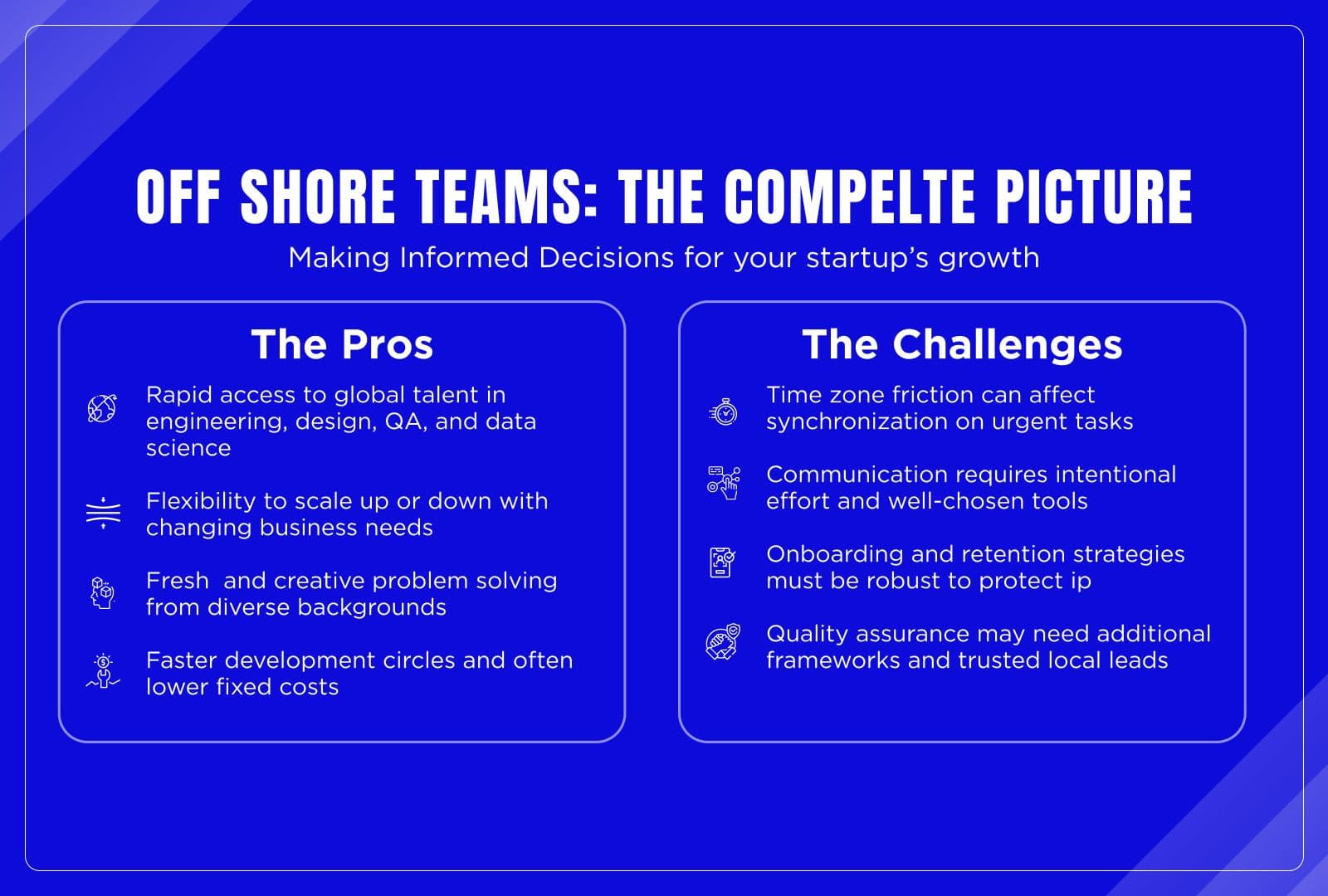
The Pros and Cons of Offshore Development for Startups
Benefits of Offshore Development
Offshore development offers Australian startups several advantages:
- Access to a global pool of experienced software engineers
- Faster development cycles and shorter time to market
- Flexibility to scale teams based on product stage
- Exposure to diverse perspectives that enhance innovation
These benefits are especially valuable when building or iterating on an MVP, where speed and learning matter more than perfection.
Challenges to Address
Despite the benefits, offshore development also presents challenges:
- Time zone differences can slow urgent communication
- Misalignment can occur without clear documentation
- Onboarding requires more effort than local hiring
- Quality assurance needs strong processes and ownership
Startups that acknowledge these challenges early are far more likely to succeed.
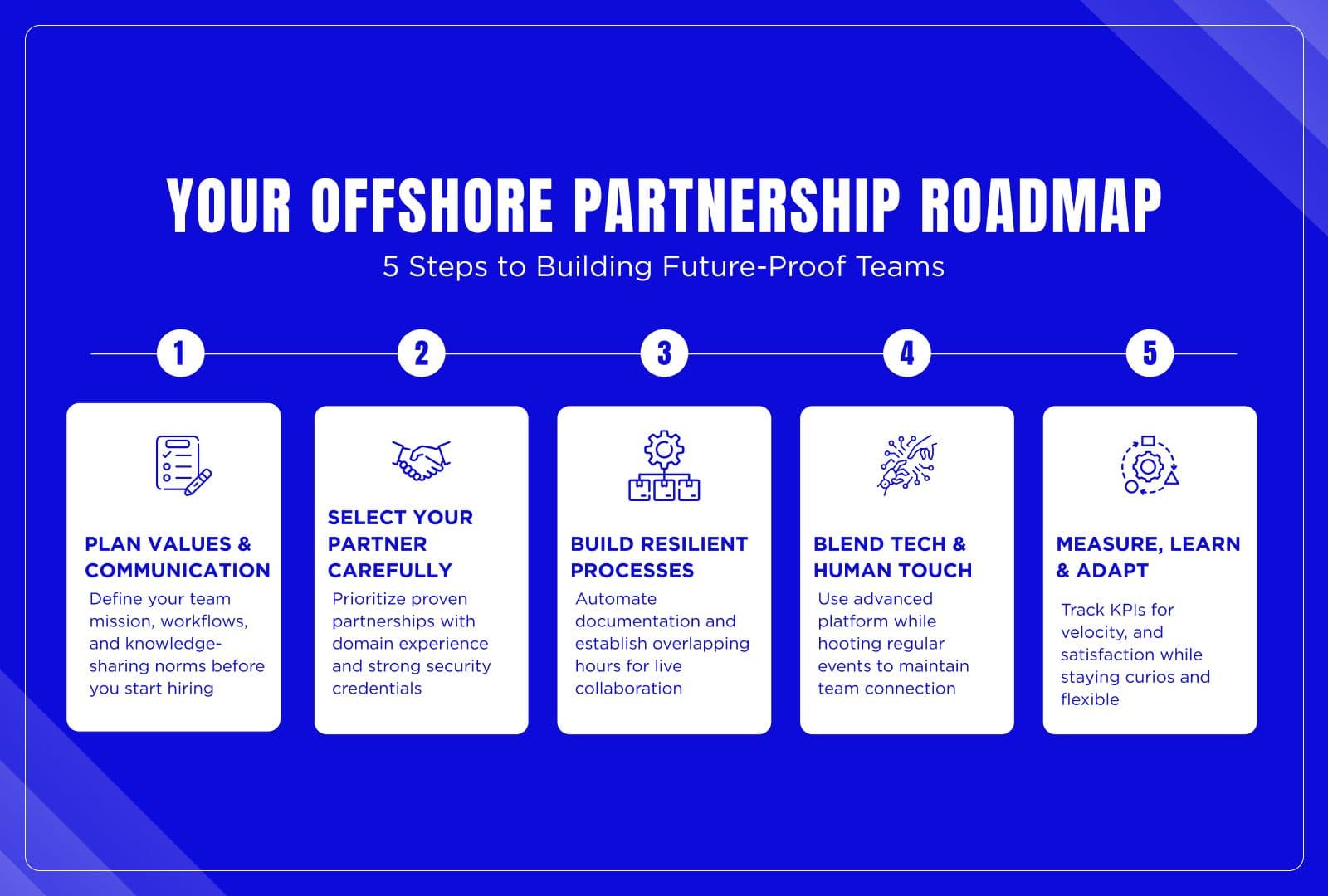
Probits’ Roadmap for Building Future-Proof Offshore Teams
Probits helps Australian startups build offshore teams through a structured, repeatable approach. The process begins with defining the team’s mission, delivery goals, and communication standards. Clear expectations reduce friction and improve outcomes.
Startups are encouraged to use asynchronous communication for routine updates and real-time collaboration tools for problem-solving. Recording key meetings ensures transparency across time zones.
Partner selection is equally critical. Founders should review past case studies, security credentials, and experience within the Australian market. Offshore teams must be flexible enough to support both MVP development and long-term scaling.
Automation, AI-assisted testing, and continuous integration pipelines help maintain quality as teams grow. Overlapping work hours ensure alignment without burnout.
Case Studies: Australian Startups Scaling with Offshore Teams
Fintech Startup Scaling Faster
A Melbourne-based fintech combined Australian product leadership with Eastern European developers and African QA specialists. Clear ownership, weekly demos, and strong documentation enabled the launch of two new products in six months.
Healthcare SaaS Platform
A Sydney healthtech startup paired local designers with Southeast Asian engineers and Latin American DevOps specialists. AI-powered onboarding and dashboards allowed rapid scaling based on client demand.
EdTech Startup Partnering with Probits
A Canberra-based EdTech company partnered with Probits to build a compliant and highly engaged offshore team. The result was consistent delivery, low churn, and strong customer satisfaction.
Common Offshore Development Mistakes to Avoid
- Treating offshore teams as external vendors
- Weak onboarding and unclear documentation
- Prioritising cost over quality and alignment
- Inadequate legal and compliance checks
- Allowing communication issues to persist
Avoiding these mistakes significantly improves offshore success rates.
Frequently Asked Questions (FAQs)
1. What is offshore development?
Offshore development refers to building software using teams located in another country. Australian startups use offshore teams to access global talent, reduce time to market, and scale efficiently.
2. Are offshore development teams still effective in 2026?
Yes. Offshore development is more strategic than ever due to improved remote tools, AI-driven workflows, and stronger compliance standards.
3. Which regions are best for offshore development in 2026?
Popular regions include Eastern Europe, Southeast Asia, Latin America, and Africa. Australian startups focus on skills, communication, and compliance rather than geography alone.
4. How do Australian startups manage offshore teams successfully?
They use hybrid team models, clear documentation, overlapping work hours, and modern collaboration tools like Jira, Slack, and GitHub.
5. What legal risks should startups consider?
Key risks include IP ownership, data security, and regulatory compliance. These are mitigated through strong contracts, audits, and experienced offshore partners.
6. Can offshore teams support MVP development?
Yes. Offshore teams are ideal for MVP development, rapid prototyping, and iterative product validation when managed correctly.
7. How does Probits support offshore development?
Probits helps Australian startups with offshore talent sourcing, compliance, onboarding, delivery governance, and long-term scaling strategies.
Conclusion: Offshore Development as a Growth Engine for Australian Startups
In 2026, the most successful Australian startups will combine strong local leadership with trusted offshore partners. Offshore development is no longer just about reducing costs. It is about building resilient, scalable teams that drive innovation and growth.
With the right strategy, tools, and partners, offshore teams become a long-term competitive advantage.
Ready to scale your startup with confidence?
Contact Probits today for a personalized offshore development roadmap.