
How to Choose a Custom Software Development Company: Buyer’s Checklist
 Binayak Ghimire
To choose a custom software development company, write a one-page brief, shortlist three to five firms, score them on the same weighted criteria, and ask questions that are hard to fake. Then call references, start with a paid discovery or pilot, and only sign a contract that assigns you the IP and puts the code in your repository.
We're a custom software development company ourselves, so read this with that in mind. It's the checklist we'd want a client to run on us, and the questions in it are the ones that separate good vendors from good salespeople.
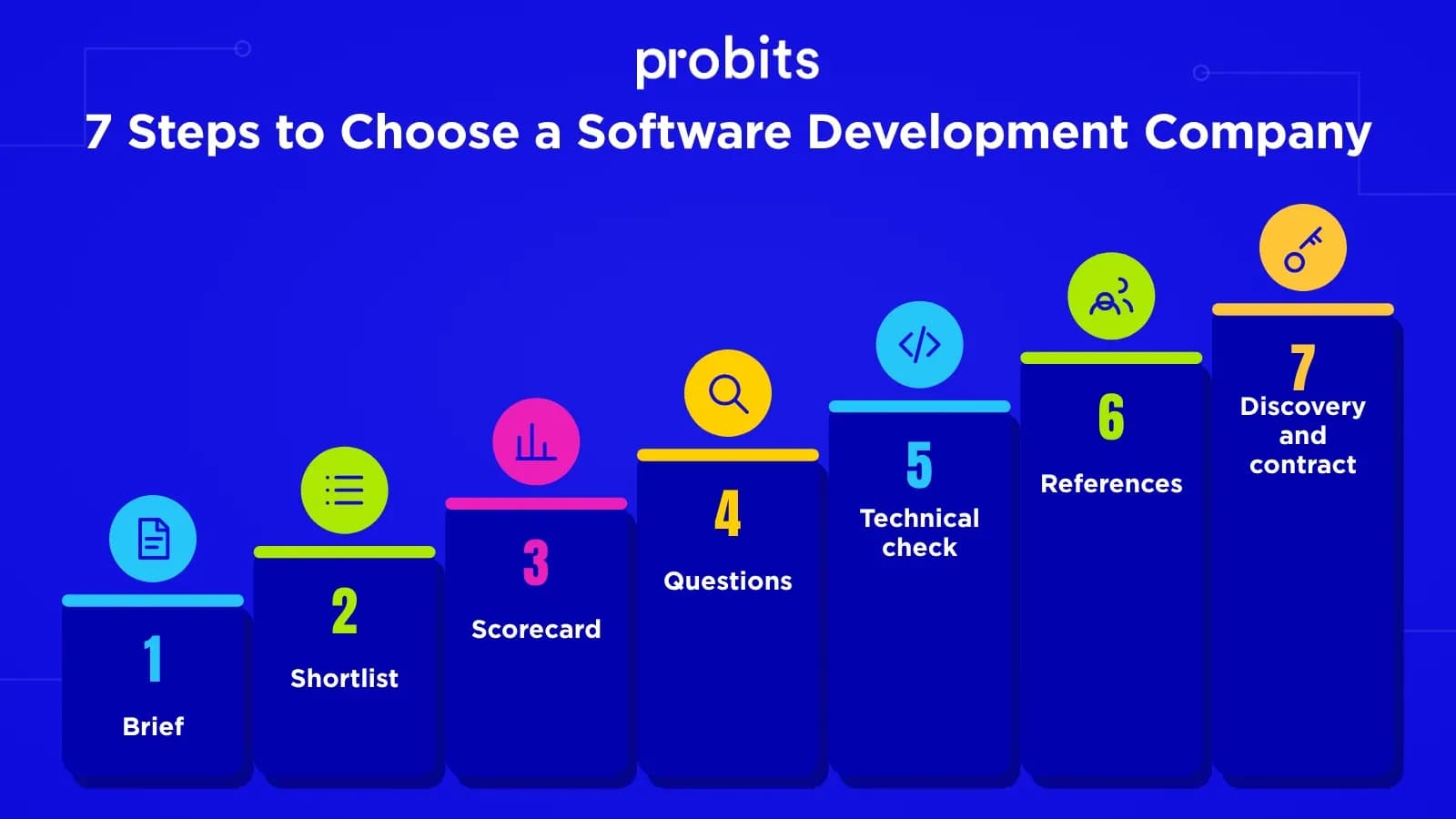
How to choose a custom software development company in 7 steps
Step 1: Write a one-page brief
Before you talk to anyone, write down the problem, who'll use the software, the two or three things it must do, any systems it has to connect to, a rough budget range and a target launch window.
A one-page brief means every vendor quotes against the same thing. Without it, you'll get one proposal for a A$40,000 app and another for a A$180,000 platform, and no way to compare them.
What goes wrong: skipping the budget range because you "don't want to anchor the price". Vendors then guess, and the proposals that come back don't fit what you can spend.
Step 2: Build a longlist, then cut it to three to five
Good sources are referrals from businesses like yours, review platforms such as Clutch and GoodFirms, and the portfolio pages of firms that have built something similar.
Before you shortlist, check the basics. Look up the company on the Australian Business Register's ABN Lookup to confirm it's a real, active Australian entity, and check how long it's been registered. If the firm uses an offshore team, ask which legal entity you'd actually contract with.
What goes wrong: inviting ten firms to pitch. You'll spend weeks in meetings and the quality of your comparison drops. Three to five is enough.
Step 3: Score every firm on the same weighted criteria
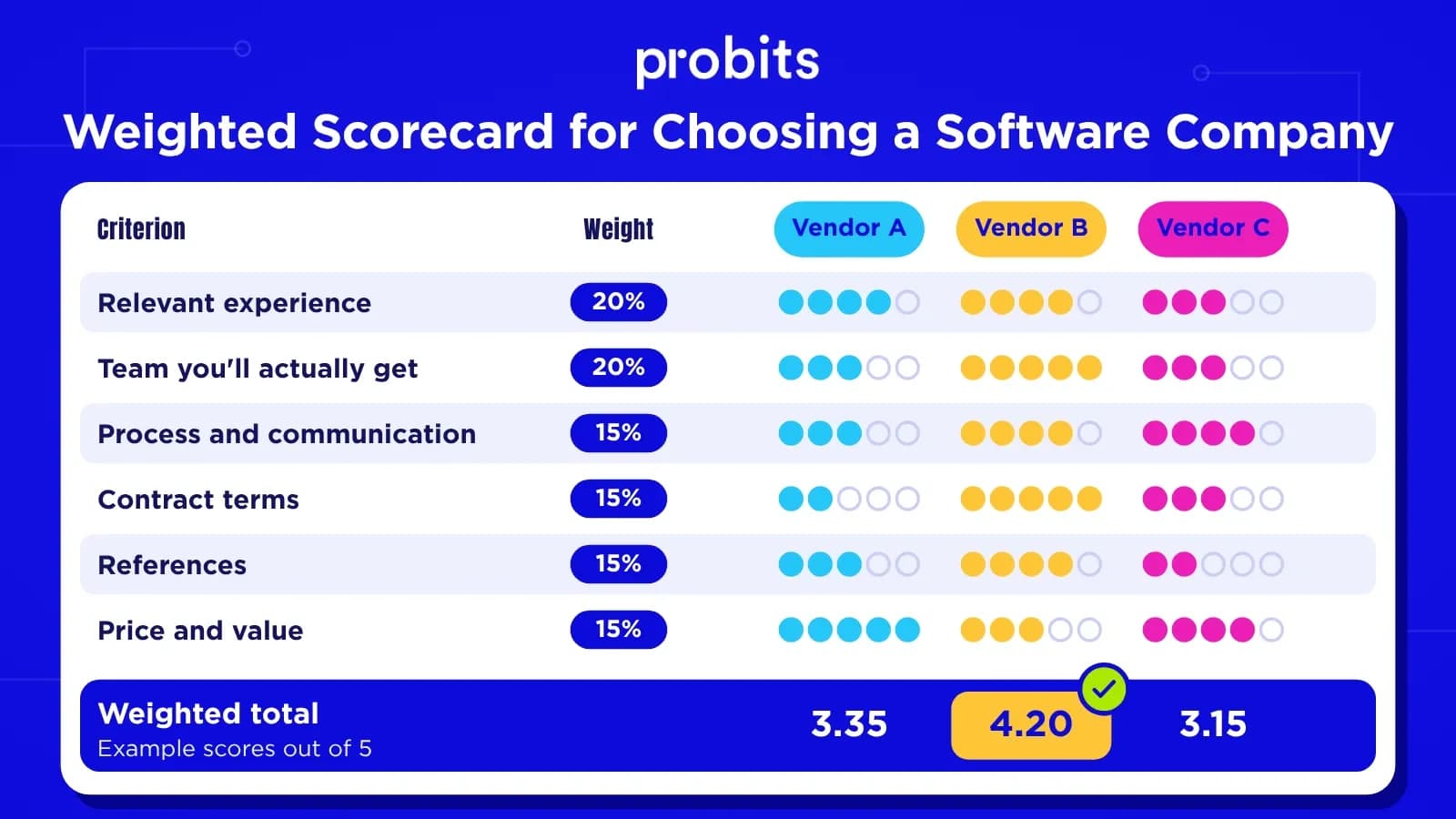
A scorecard stops the most charming pitch from winning by default. Agree the weights with whoever signs the cheque before the first meeting.
| Criterion | Weight | What a 5/5 looks like |
|---|---|---|
| Relevant experience | 20% | Has built something similar in size and type, and can show it |
| Team you'll actually get | 20% | Named tech lead and developers, met before signing |
| Process and communication | 15% | Two-week sprints, demos, a named contact, overlap with your hours |
| Contract terms | 15% | IP assigned to you, code in your repository, clear change process |
| References | 15% | Two or more clients who'd hire them again, reachable by phone |
| Price and value | 15% | Itemised estimate with assumptions, not a single lump sum |
Price sits at 15% on purpose. The cheapest quote often leaves out testing or deployment, so the real cost shows up later as variations.
Step 4: Ask questions that are hard to fake
Every agency has a polished portfolio. These questions get past it:
- "Who will actually work on my project, and can I meet the tech lead before signing?" You want names, not "our senior team".
- "Can I see the repository from the first sprint?" The answer should be an immediate yes.
- "Walk me through a project that went wrong and what you changed." Every firm has one. A vendor who can't name it either hasn't done much or isn't being straight with you.
- "How do you estimate, and what assumptions sit behind this number?" Look for an itemised breakdown, with testing as its own line.
- "How are changes priced once we start?" A fair answer looks different under fixed price vs time and materials, so ask how they handle each.
- "What happens if we part ways halfway?" A good partner has a clear exit: code, documentation, credentials and a handover call.
- "Do you carry professional indemnity and cyber insurance?" Ask for the certificates of currency.
What goes wrong: asking only about technology. Most failed projects we hear about failed on communication, scope or ownership, not on the choice between React and Angular.
"The best question a buyer can ask us is who will actually work on their project. A good agency answers with names, and lets you meet them." - Head of Marketing, Probits
Step 5: Have someone technical check their work
If you're not technical, bring someone who is for one hour: a friend who's a developer, or an independent consultant. If you're still deciding between an agency and a no-code tool, compare the MVP options for non-technical founders first.
Ask the shortlisted firms to walk that person through a real codebase they've built (with client permission) or a sample project. Look for automated tests, readable structure, a deployment pipeline and documentation. Ask how they handle security basics such as access control, secrets and backups.
What goes wrong: judging quality from the user interface. A good-looking app can sit on code nobody else can maintain, and that's the problem you'll pay for when you change vendors. Home Handy spent two to three years with several developers before it reached us, and the code had to be rebuilt before the app could launch.
Step 6: Call references and ask specific questions
Ask each vendor for two references from projects similar to yours, then call them. Email references are too polite to be useful.
Ask the reference:
- Did the project finish on budget? If not, by how much, and why?
- How did the vendor handle the first serious problem?
- Is the same team still working with you?
- Would you hire them again for your next project?
The last question matters most, so listen for any hesitation.
Some firms (Probits included) work under NDAs, so not every project can be named publicly. That's normal, but any firm should still be able to give you at least one reference you can phone. We've delivered 25+ projects, and some clients, such as Kiindred, have worked with us for more than five years.
What goes wrong: only calling the references the vendor picked. If you know anyone else who's worked with the firm, call them too.
Step 7: Start with paid discovery, then sign the right contract
Before committing to the full build, pay for a short discovery phase or a small pilot. You'll see how the team works, how they communicate and whether their estimates hold, for a fraction of the build cost. A paid software discovery phase should leave you with a scope and estimate you could take to any vendor.
When you sign the main contract, check three things above all: the IP is assigned to you in writing, the code sits in your repository, and there's a defined process for changes and exit. The first one matters because, in Australia, who owns custom software source code depends on what the contract says.
What goes wrong: signing the vendor's standard contract without reading the IP clause. Under Australian law, code written by a contractor belongs to the contractor unless the contract assigns it to you.
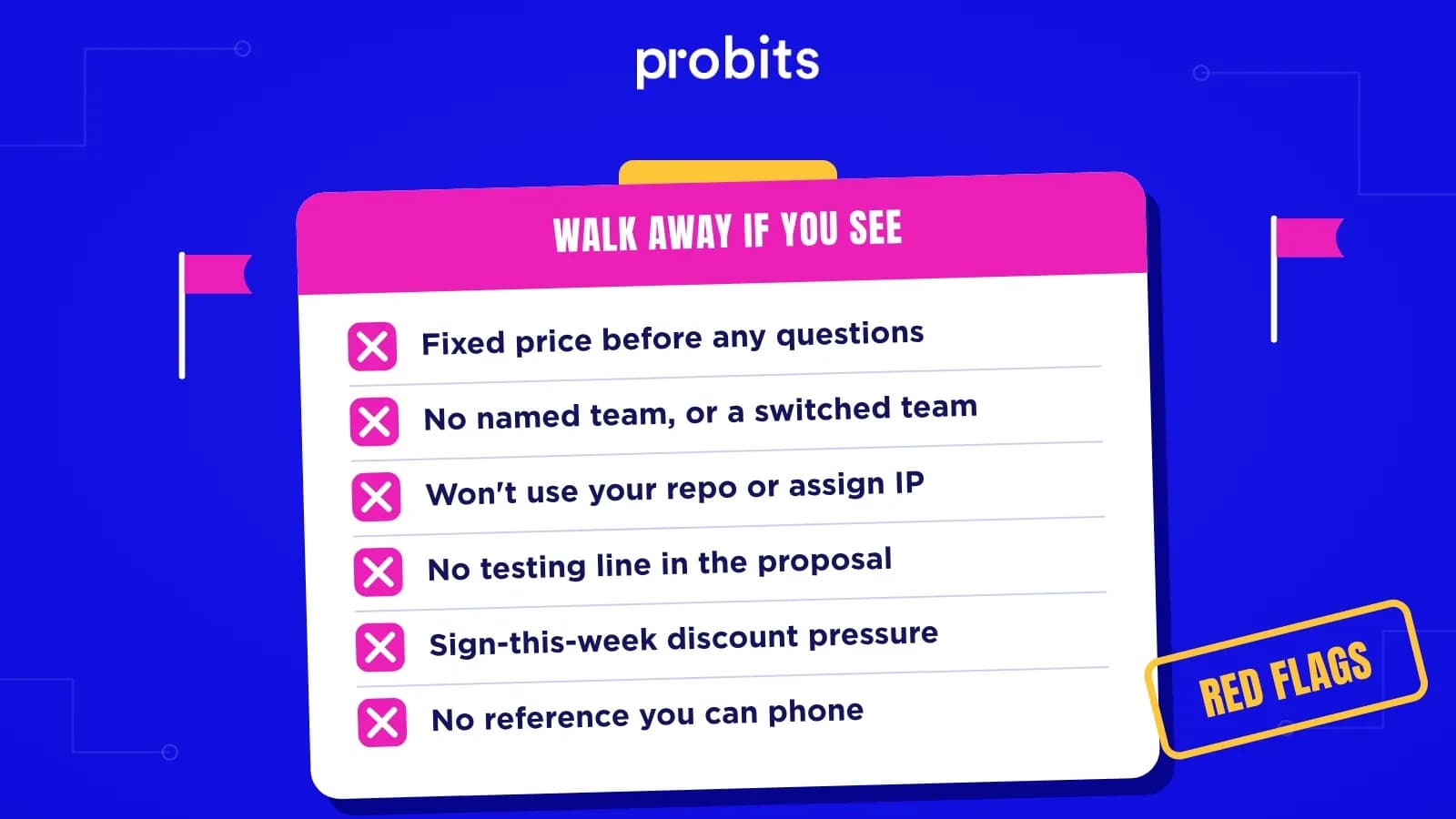
Red flags to walk away from
- A firm fixed price and timeline before anyone has asked about your workflows
- No named team, or a different team at the contract stage from the one you met
- Reluctance to put code in your repository or assign IP
- A proposal with no testing line, or testing bundled into "development"
- Pressure to sign quickly with a discount that expires this week
- No reference you can phone
Local, Offshore or Hybrid?
Location changes the price more than anything else on this list. Australian agencies charge Australian rates. Offshore teams cost less but need more care on communication, time zones and contracts. Hybrid firms, with an Australian entity and an overseas engineering team, sit in between.
At Probits, your contract is with our Sydney company and the engineering team is in Nepal, with up to six hours of overlap with AEST. If you're weighing offshore options, choosing an offshore software development partner adds a few checks of its own, such as time zones and contract jurisdiction.
Frequently asked questions
How many software development companies should I compare?
Three to five is enough. Fewer gives you little to compare, and more turns the selection into weeks of meetings without improving the decision.
What should I ask a software development company before hiring?
Ask who will work on your project, whether you can access the code repository from the first sprint, how they estimate and price changes, what happens if you part ways, and for two references you can phone.
Should I choose the cheapest software development quote?
Not on price alone. Cheap quotes often leave out testing, deployment or project management, which come back later as variations. Compare itemised estimates with the same scope and assumptions.
How do I check a software company's references?
Phone them rather than emailing. Ask whether the project finished on budget, how the vendor handled problems, whether the same team is still involved, and whether they'd hire the company again.
Is it worth paying for a discovery phase before choosing a developer?
Yes, for most projects. A paid discovery or pilot shows how the team works and whether its estimates hold, for a small fraction of the full build cost, and gives you a scope you can take to another vendor if needed.